Rocket Knight Adventures: The History & Development of Konami’s Hit
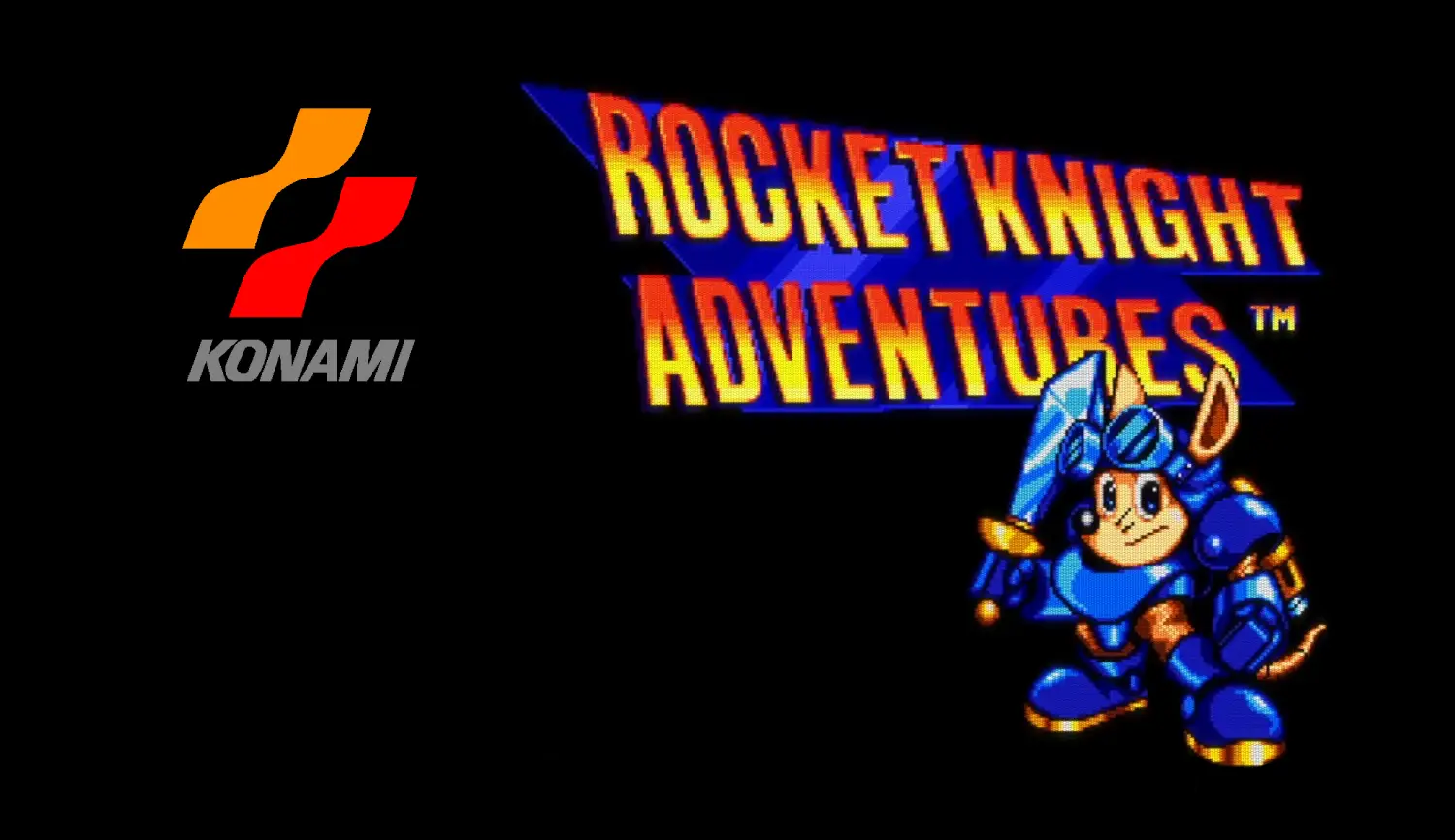
Rocket Knight Adventures was more than a great game on the Sega Genesis when it launched in 1993. It was a huge departure in a long-lasting relationship that had defined two gaming juggernauts for nearly a decade. And one of those juggernauts, Konami, was looking to create it’s own Mario/Sonic. This is the story of the development of Rocket Knight Adventures and how its creation showed a major division between two of the biggest names in gaming.
Konami & Nintendo’s Relationship
In 1981, long before Rocket Knight Adventures, Konami launched Frogger in arcades. Its success was immense and immediate. The simple game was easy enough for a beginner to understand, but hard enough for even the most seasoned gamer (which in 1981 didn’t consist of many people) to find it a challenge. The success of Frogger catapulted Konami as a company and led to many more arcade hits such as Q-Bert, Gradius, and Contra.

As console gaming started getting a foothold in homes across the world with the Atari 2600, Konami began porting its arcade games to consoles. Ports to the Atari 2600 took off, with the Frogger port making $40 million in its first year1.
Another gaming company out of Japan was looking to dethrone Atari with its own console. Launching in 1983, Nintendo’s 8-bit Famicon brought better graphics and controls than the Atari 2600. Plus, Nintendo brought its own arcade ports like Donkey Kong to the system. With superior hardware, it became clear to Konami that Nintendo should be the company to partner with.
Konami and Nintendo partnered in 1985, allowing Konami to bring arcade hits like Contra to the Famicon/NES, and introduce exclusive titles like Castlevania to the system. The partnership paid off with Konami growing from $10 million in revenue in 1987 to $300 million by 1991. Konami was one of Nintendo’s most successful developers, and in turn, Nintendo gave Konami access to a huge share of gamer households.
Rocket Knight Adventures Breaks the Relationship
In the early 1990’s, Konami was flying high off of arcade hits such as Teenage Mutant Ninja Turtles, The Simpsons, and X-Men arcade. They also started creating games for the Super Nintendo in 1990, bringing home 16-bit titles like Teenage Mutant Ninja Turtles: Turtles in Time.
However, due to Nintendo’s very strict rules around who could make games for its consoles, and the number of games one developer could make each year, Konami had all but ignored Sega’s Mega Drive, which had launched in 1988. But Nintendo’s stranglehold on how many games any developer could make for its system each year angered Konami and led them to create a US-based shell company called Ultra Games, which circumvented Nintendo’s rules by giving Konami double the number of games it could create for Nintendo.
In the early 1990’s everything in the gaming world shifted. Nintendo, the company that was the very definition of “video games” throughout the mid and late 1980’s was now under attack, and that attack was led by a little blue hedgehog. Sega of America, under the leadership of Tom Kalinske, was putting up a monumental fight against Nintendo, and Konami saw that change was in the air. The king of gaming, with their strict rules and snobby attitude was quickly losing marketshare to Sega.
Konami decided it needed a presence on the 16-bit Sega system (Mega Drive/Genesis) and they needed that presence to be big.
So they tasked their developers and artists to come up with an original mascot that would go toe-to-toe with Mario and Sonic.
Rocket Knight Takes Flight
Nobuya Nakazato
Rocket Knight Adventure’s director, Nobuya Nakazato, joined Konami in 1988 and worked as a graphic designer on the NES version of Teenage Mutant Ninja Turtles and Castlevania: The Adventure for the Game Boy. During this time, he was seated next to the Super Contra (Super C) team and did informal playtesting for them.4

After three years at Konami, Nakazato was put on a team with a few newer employees. Despite only three years of experience, he became the senior developer on a very young team and was given a new title to direct: Contra III. Nakazato took a new approach to the game, replacing some of the tired trends of fighting a bunch of weak enemies only to have a single boss battle at the end with many mini-bosses and varied gameplay that changed within each level – including jumping into tanks, hanging from girders, and top-down fighting similar to the original Konami classic Metal Gear on NES.
Creating the Next Mario/Sonic
Nintendo had Mario. Sega had Sonic.
And Konami wanted their own iconic figure (no offense to the Frogger frog, but he just wasn’t cutting it.) The design team, led by Nakazato started working on a character that would have mass appeal and could go head-to-head with Mario and Sonic.
Anthropomorphic animals were all the rage at the time (Sonic, Aero the Acrobat, Battletoads, etc.) and the team set out to create an animal mascot that could rival Sonic’s attitude yet still be distinct. They landed on an unlikely marsupial: a opossum.
It’s unclear if the decision was made tongue-in-cheek to a opossum’s nature to play dead when threatened, or to take an animal that is not normally known as being cute and making it the cutest darn thing you’ve ever seen, but Nakazato and team landed on it and created an anime-style opossum with big bright eyes, huge expressions, and outfitted it with a costume that played directly into high-octane gameplay.
Speed was of concern for the team, and not just to get the project done on time. Sonic had redefined platforming and knocked Mario off of his throne as the king of gaming. Konami’s new game had to play fast, and Nakazato leaned into the intense gameplay of Contra for Rocket Knight Adventures. But he couldn’t just make a fast opossum, essentially ripping off Sonic. He needed something unique. He landed on a gameplay mechanic that was similar to Sonic 2‘s new spin dash: a rocket pack.
One of Konami’s most famous artists, Tom duBois, also created concept art for the character.
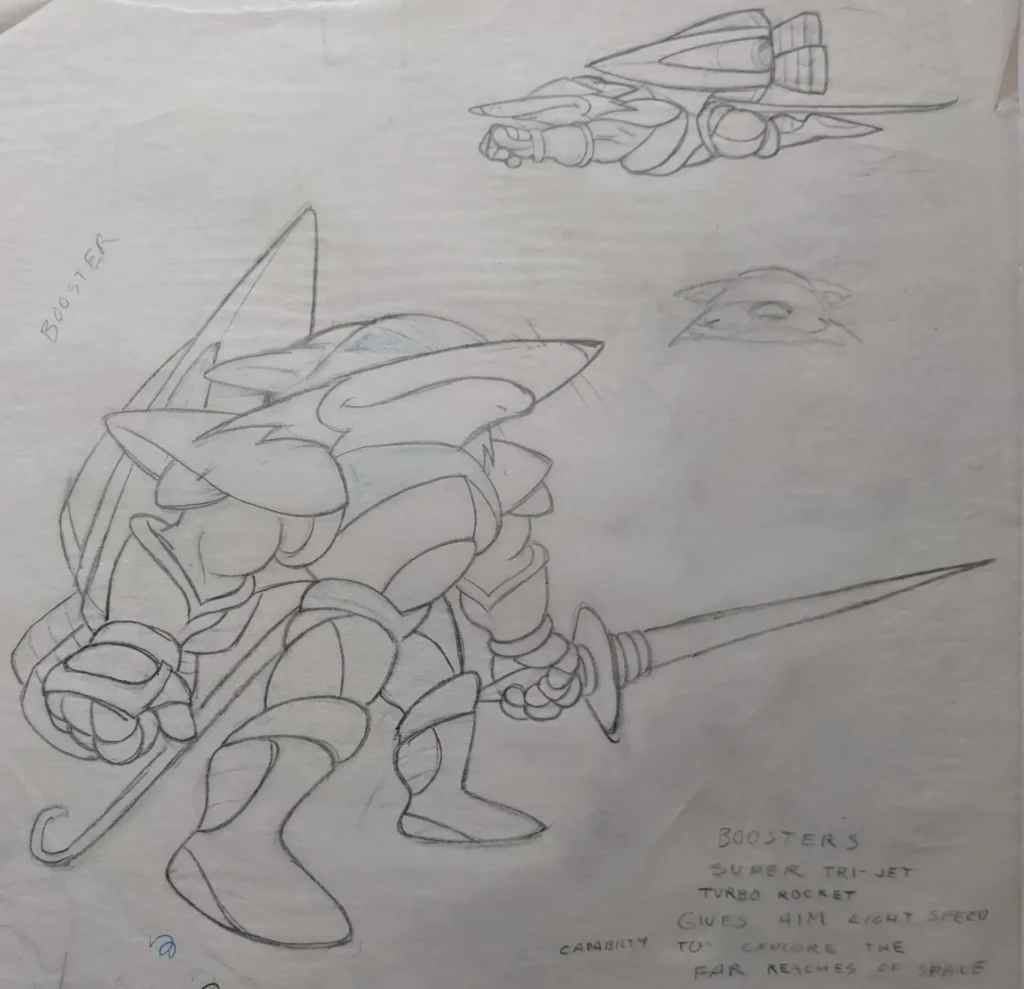
Getting the character just right took several attempts. The team played with concepts that featured a more serious and almost villainous look but dialed it back to the traditionally cute look that would appeal to more audiences.
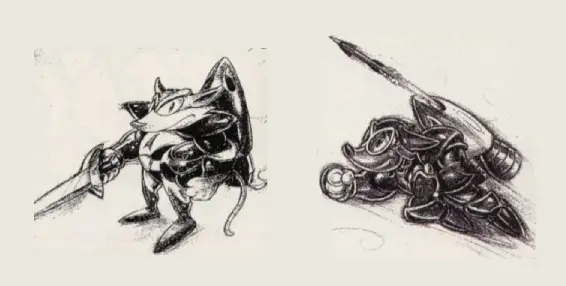
Like Sonic 2, the character could charge up and launch itself across the map. However, instead of just rocketing side to side like Sonic, the opossum could launch himself forward, backward, up, or at a diagonal.
The introduction of the jet pack also inspired the character’s name: Booster (which would later become Sparkster just before the launch of the game).
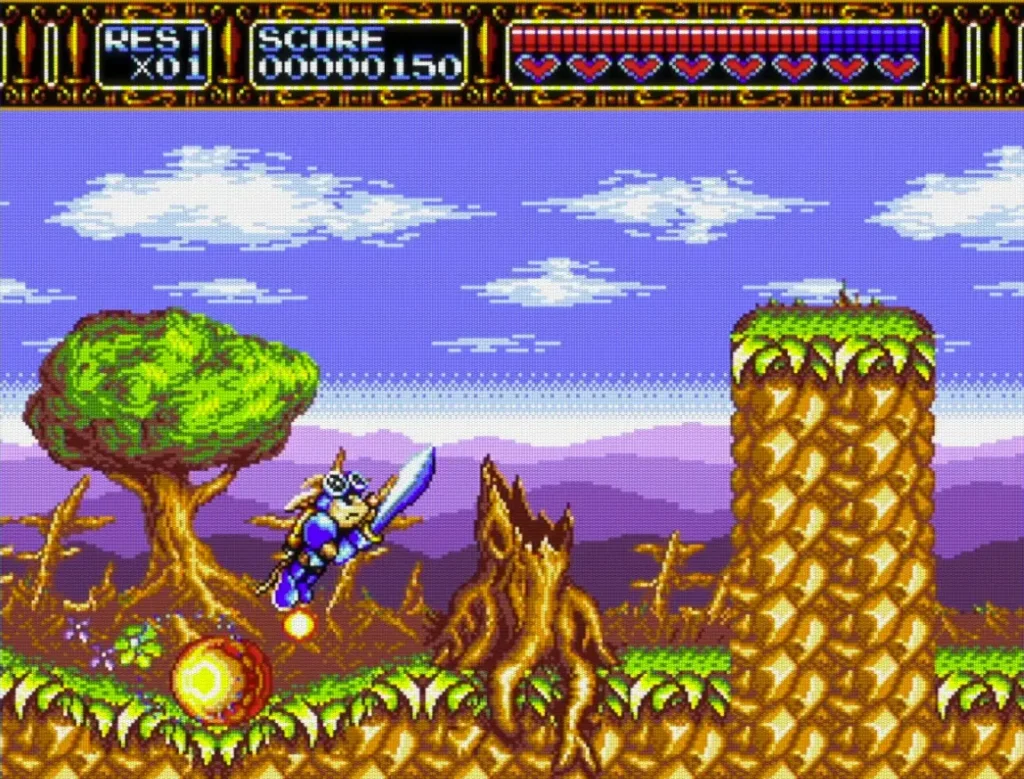
Rocket Knight Adventures on Genesis & SNES
Konami green-lit Rocket Knight Adventures to take flight and Nakazato’s team began development of it on the two big 16-bit consoles. The game would be made for the Sega Genesis first and then ported to the SNES. Konami wanted to cash in on Sega’s recent success at dethroning Nintendo and bet big on the Genesis with their new flagship mascot.
This was a massive turn for Konami, essentially putting long-time partner Nintendo on the backburner so they could seize the popularity of Sega’s Genesis.
Balancing the Burst of Rocket Knight Adventures
Sparkster’s most notable attribute also became a development hurdle. Enabling a character to launch into the air in a platforming game presented a number of challenges. First, platforming relies on meticulous and precise jumping to get from one place to another. Now your character could launch itself at mach 3 to the other side of the map. That’s a problem for level designers as well as players, because the launches aren’t controlled and it would be very easy for a player to simply fall into a pit and die after a launch.
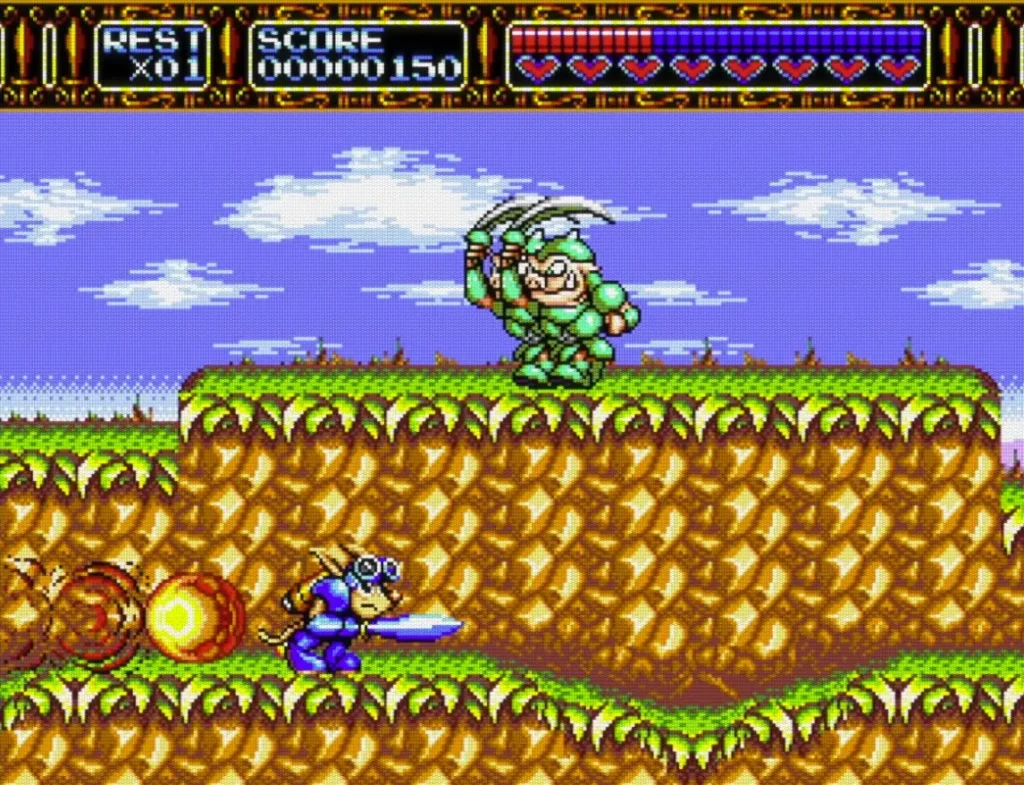
To account for this, the development team forced users to use the rocket in certain areas to get over obstacles, but also created “catch points” where launching Sparkster would result in him being stopped by well-placed walls in the level. This allowed the game to feel like controlled chaos, much like Sonic the Hedgehog. This chaos and speed was also a hallmark of Nakazato in Contra III, and following Contra titles he worked on.
Adding to the chaos was the ability for Sparkster to ricochet off of walls when his jet pack was activated. This mechanic was used to solve some puzzles in cave levels where simple jumps or vertical launches wouldn’t get Sparkster where he needed to be. These ricochets could also be used to knock out enemies from above or behind depending on the cave Sparkster was in.
The game also gave users the ability to try using the rocket whenever they wanted, and yes, sometimes that would result in Sparkster burning his butt in lava. It was all part of the trial and error of learning the game.
Pushing the Genesis to its Limits
When the Super Nintendo launched it was a more powerful system in many ways than the aging Sega Genesis. This didn’t stop Nakazato and the Konami team from pushing the Genesis to replicate many of the advanced effects the SNES boasted with its Mode 7 (the ability to rotate and scale sprites on the screen.)
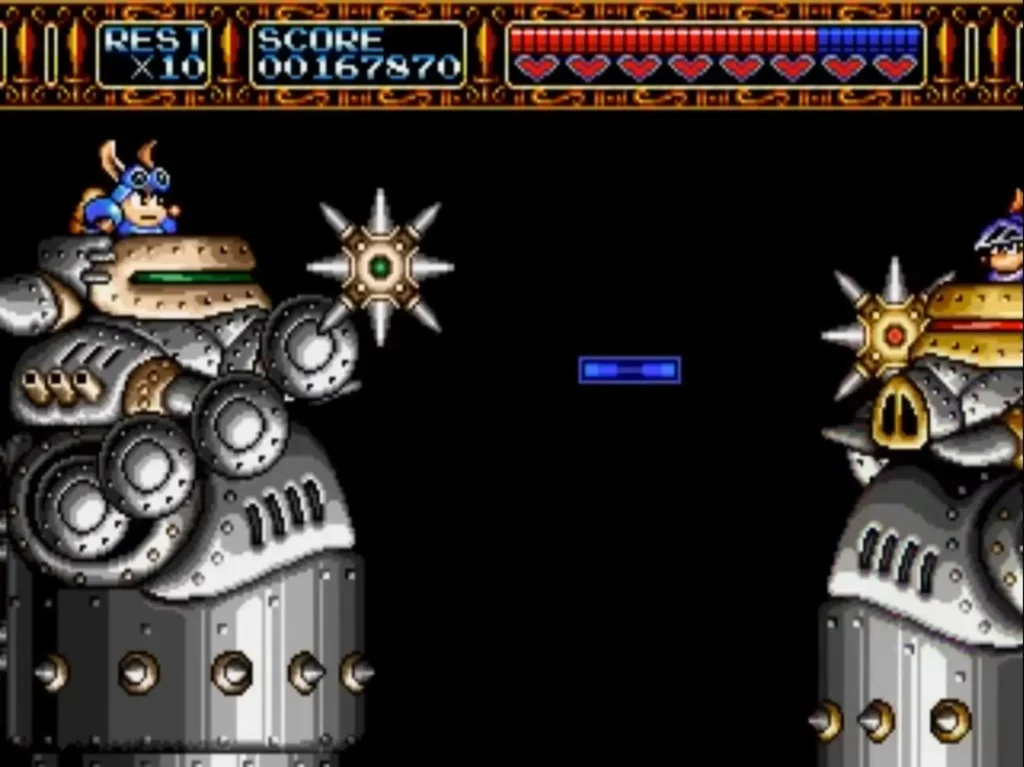
The team used advanced programing tricks to simulate effects that the Genesis should have been able to do. This included adding a bed of lava that featured wavy reflections of Sparkster and the environment below him and the creation of multi-jointed sprites that allowed for huge characters to battle each other (in the form of a Giant Pig Robot boxing match in Stage 5).
The Music of Rocket Knight Adventures
Bringing a new character to life required more than just pushing gameplay, graphics and cuteness. It required a catchy score that would be immediately recognizable. The score would have an orchestral feel while also leaning into some of the darker and sci-fi/steam-punk themes and environments of the game.
A number of composers are given music credits on Rocket Knight Adventures including Masanori Oouchi, Hiroshi Kobayashi, Masanori Adachi (all three of which worked with Nakazato on Contra III) Aki Hata, and the legendary Michiru Yamane who would go on to create music for Castlevania: Bloodlines and Castlevania: Symphony of the Night.
Rocket Knight Adventures‘ soundtrack is one of the more memorable on the Genesis, and it makes sense since Konami put some of their best composers on the project.
Rocket Knight Adventures is Cute Contra
Nakazato’s Contra influence is all over Rocket Knight Adventures. From the fast, chaotic, run-and-gun gameplay to the insane, over-the-top robotic bosses that Sparkster encounters throughout levels, the game constantly gives nods to its Contra roots.
Rocket Knight Adventures also follows Contra III’s gameplay where levels are broken up by many mini-bosses that feel like a normal boss, but instead of going to the next level, the player just keeps advancing through the existing level.
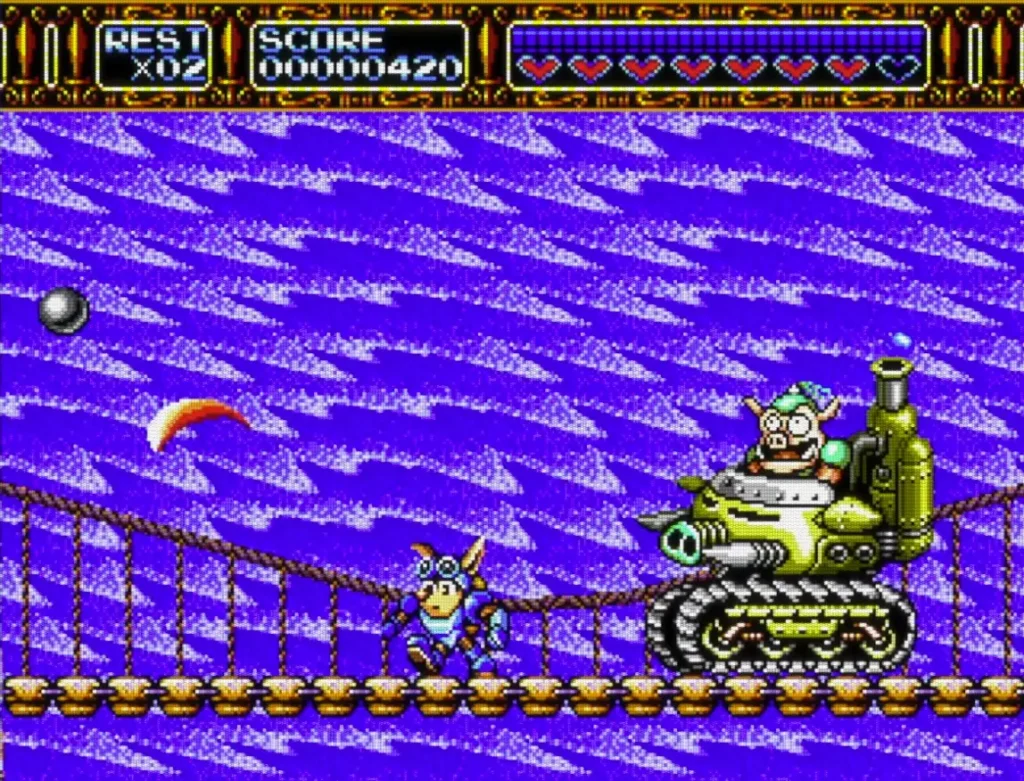
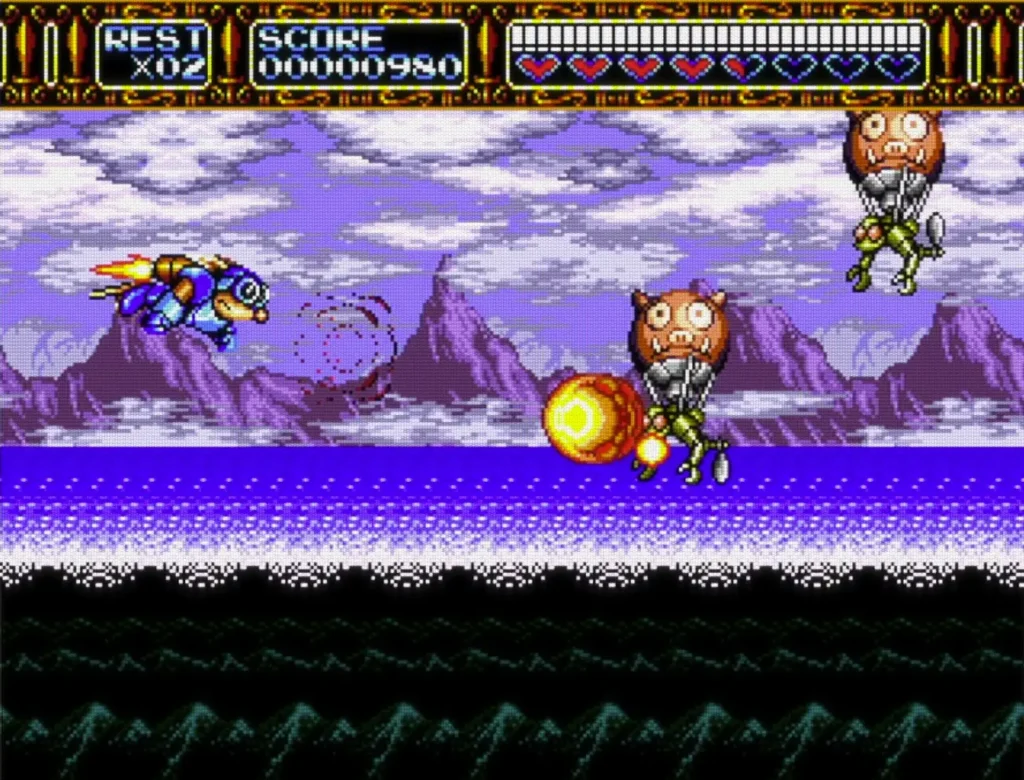
Similar to Contra, Rocket Knight Adventures also has different perspectives and playstyles for Sparkster as he goes from level to level. Another nod to a Konami classic, Gradius, is when Sparkster takes flight in horizontal shooter sub-levels with beautiful parallax scrolling, knocking down enemies, dodging missiles and asteroids, and taking on mini bosses in the air.
Rocket Knight Adventures Launches (kind of)
On August, 6, 1993, Rocket Knight Adventures launched in Japan and shortly after in the US, ushering in Konami’s new mascot. The game was met with great reviews. Game Pro magazine would say, “Sparkster’s jet-propelled speed will blow your doors off, and the action swings. If you have a taste for a fast fight (and fried pork too), stick Rocket in your Pocket.”6
Mean Machines would say, “This is one of the best games I have ever played.”7
Soon, Konami was featuring Sparkster as their mascot on advertising everywhere.5
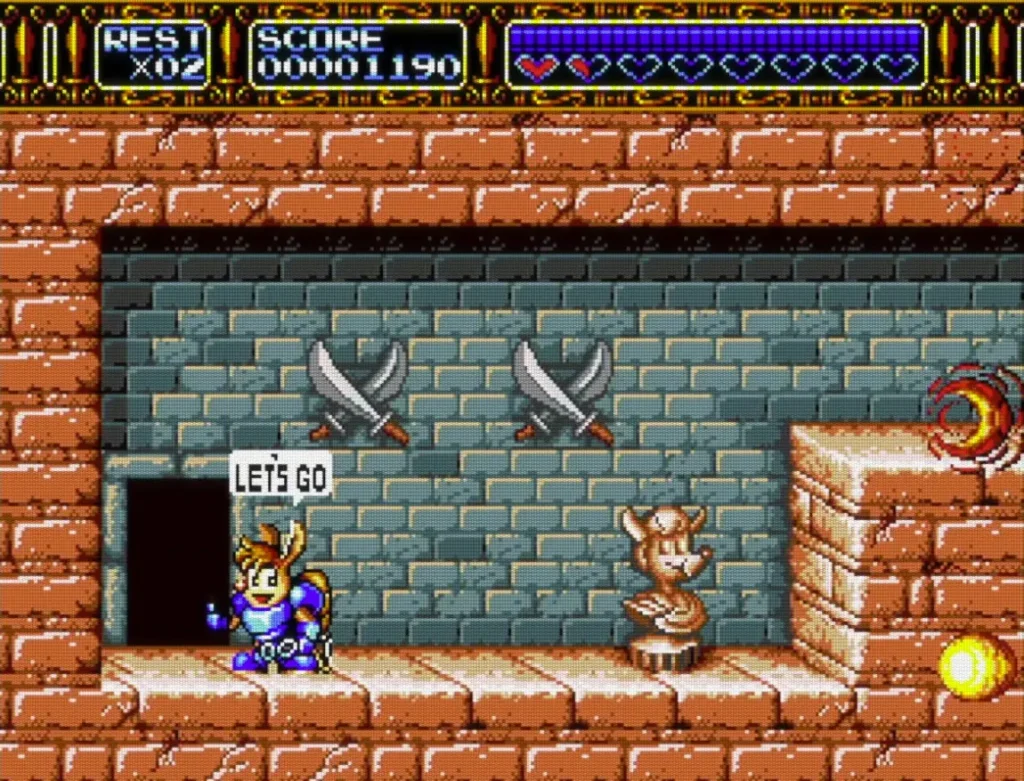
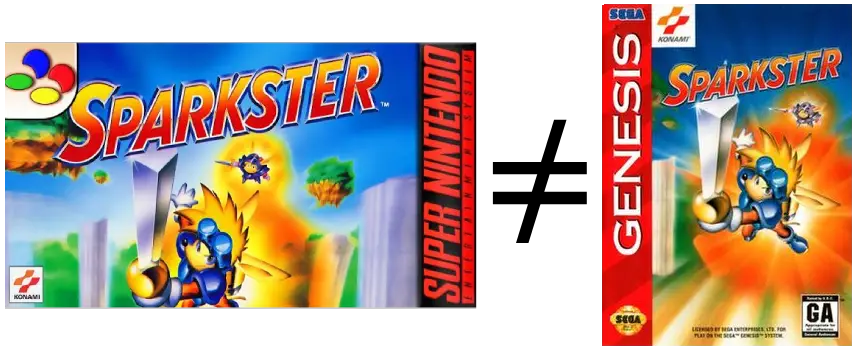
However, despite announcing to the press that Rocket Knight Adventures would be coming to the SNES, the port was shut down.8 Instead, Rocket Knight Adventures stayed a Genesis exclusive. SNES owners would need to wait another year for the release of Sparkster, a completely different title featuring the rocketing opossum, that wasn’t quite as good as Rocket Knight Adventures and was developed by a different team when Nakazato turned their attention back to Contra and created Contra: Hard Corps for the Genesis.
To make things even more confusing, a third team worked on Sparkster: Rocket Knight Adventures 2, which released for the Genesis in September/October of 1994.
Rocket Knight’s Legacy
Ultimately, Konami’s attempt at making a mascot as recognizable as Mario or Sonic fell short. Despite making a great game, Sparkster was up against stiff competition in 1993 and couldn’t rise above the noise like the two other gaming icons did in their time.
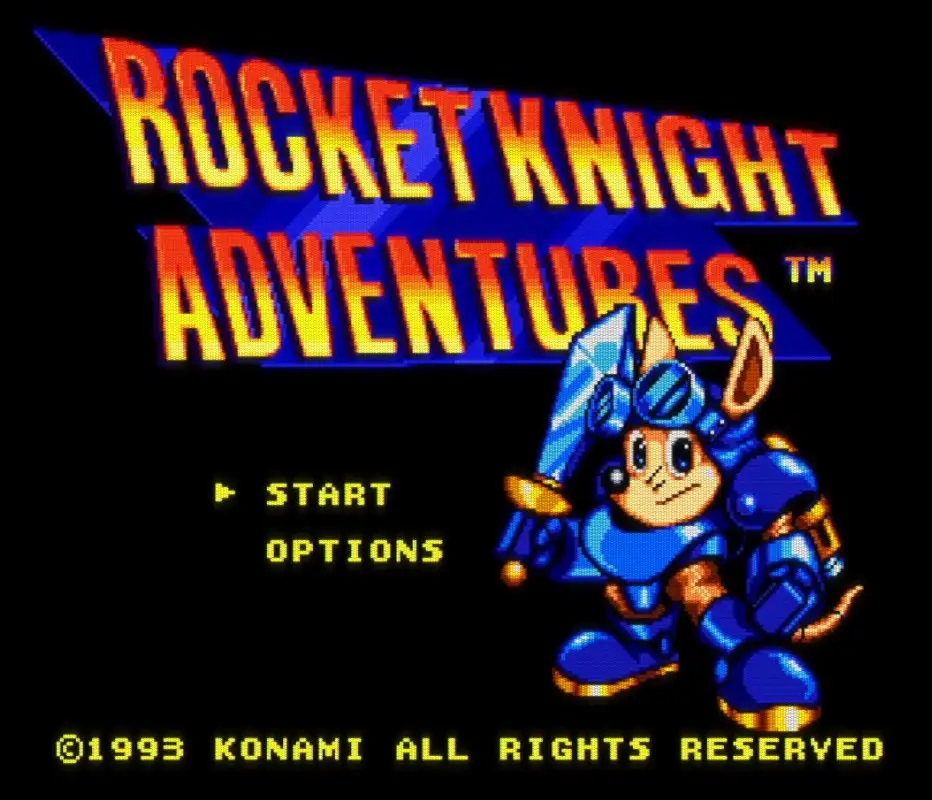
However, Sparkster still has his fans and he returned for cameos in many other Konami games including Contra: Shattered Soldier for the PS2.
Konami continued to move away from Nintendo as the years went on and saw massive success with other titles like Metal Gear Solid and Silent Hill on Sony’s Playstation.
Nobuya Nakazato continued making Contra games for Konami, with his latest release being Contra: Rogue Corps in 2019.
References:
- Frogger Wikipedia page
- Konami Wikipedia page
- Contra III: The Alien Wars Wikipedia page
- History of Contra (Digital book included with Contra Anniversary Collection)
- Rocket Knight Adventures Wikipedia page
- Game Pro Issue 50 (September 1993)
- Mean Machines Sega, Issue 11, September 1993
- Nintendo Power No. 46. March 1993
- Prerelease: Rocket Knight Adventures, TCRF.net