Star Wars: X-Wing Development – When Star Wars Entered the Cockpit
By Søren Kamper – Guest Contributor
There was a time when the idea of a truly serious Star Wars flight simulator felt both obvious and strangely impossible.
Obvious, because Star Wars had always been built on the language of aerial combat. George Lucas famously drew from World War II dogfight footage when shaping the space battles of the original film, and the Death Star trench run had the structure of a perfect combat mission: briefing, target, obstacles, wingmen, enemy pursuit, impossible odds, one desperate shot.
Strangely impossible, because early Star Wars games had usually treated that fantasy in shorter, simpler bursts. The arcade cabinet could put you into the trench run. Home computer and console games could borrow the ships, the music, the scrolling stars, the blaster fire. But the deeper fantasy – not just seeing an X-wing, but learning to operate one – had not really been fully realized.
Then, in 1993, Star Wars: X-Wing arrived on PC and changed the shape of Star Wars games.
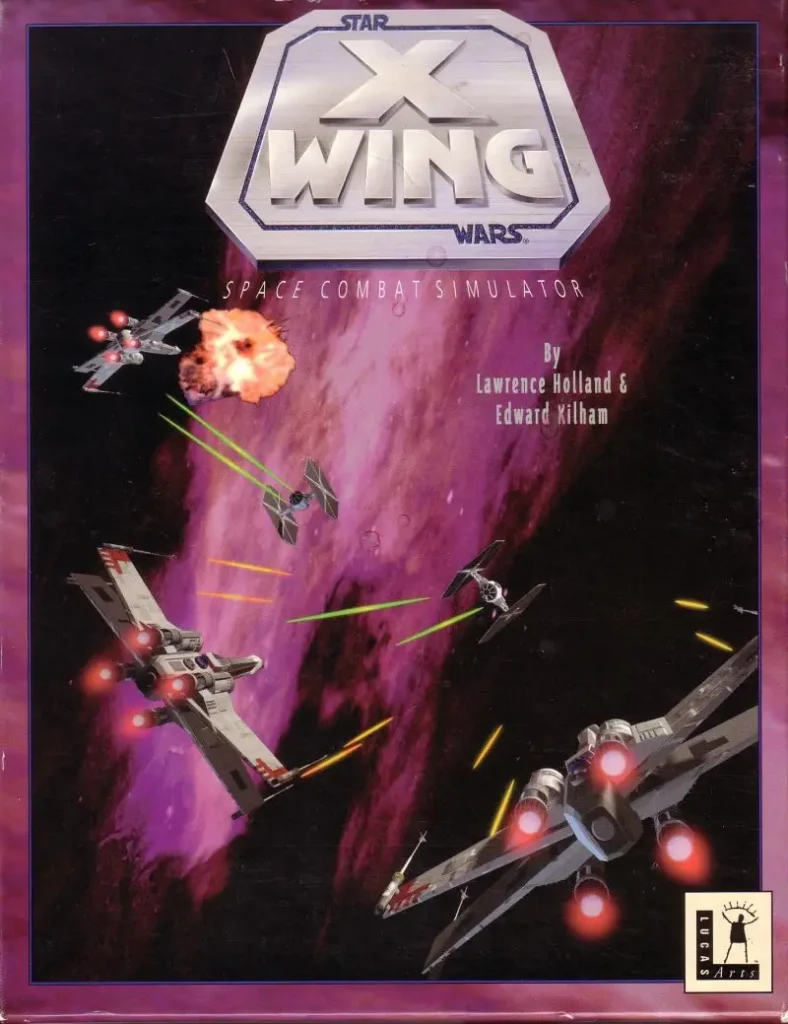
It was not the first Star Wars game. It was not the first space combat game. It was not even the first game to understand that people wanted to fly around pretending to be heroic in front of a screen. But it was the game that finally took the Rebel pilot fantasy seriously as a simulation problem.
Not serious in the joyless sense. This was still Star Wars. There were laser cannons, TIE fighters, heroic briefings and moments where everything went wrong in exactly the way space opera demands.
But Star Wars: X-Wing asked players to do something Star Wars games had rarely asked before.
It asked them to work.
Before X-Wing, Star Wars Games Were Still Looking for Their Shape
By the early 1990s, Star Wars already had a video game history, but not yet a clear video game identity.
The famous Atari arcade game had captured the thrill of the Death Star run with vector graphics and immediate spectacle. Console titles and home computer adaptations had taken different pieces of the license and tried to make them work inside the limits of their machines. Some were exciting. Some were strange. Some were very much products of their time, which is the polite, retro gaming way of saying “good luck, modern player.”
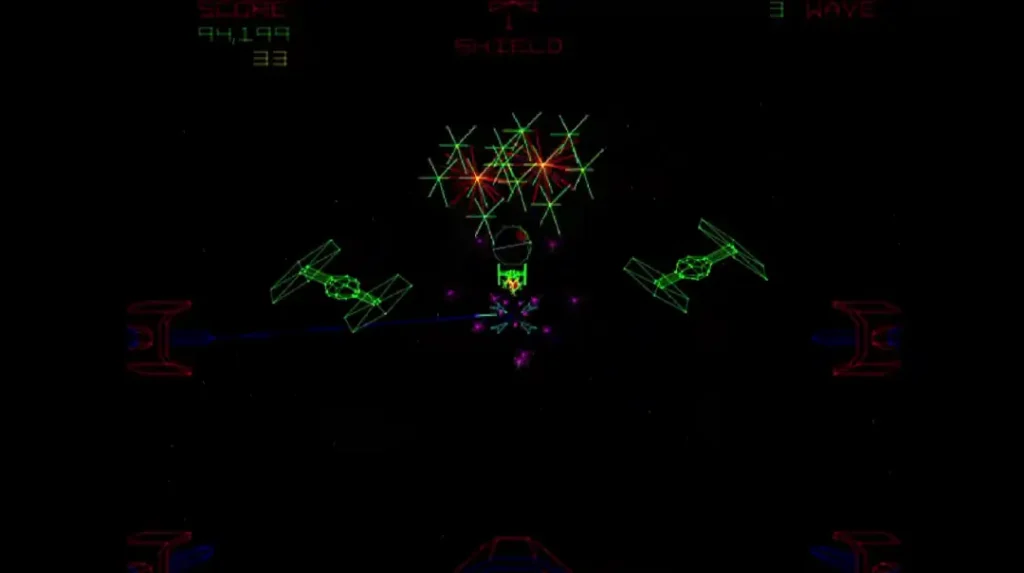
That unevenness is part of the charm now, but it also shows how open the field still was.
Star Wars had not yet settled into one dominant game form. It could be arcade action, side-scrolling combat, home computer experiment, or a movie scene turned into a score-chasing loop. The franchise was powerful, but developers were still learning what kind of game Star Wars wanted to become.
Before Star Wars: X-Wing, the cockpit fantasy was waiting for the right developer, the right technology and the right moment.
That developer was Lawrence Holland.
Lawrence Holland Had Already Learned How to Make Air Combat Feel Dangerous
Lawrence “Larry” Holland was not the obvious choice just because he was a Star Wars superfan with a dream board full of X-wings. He was the right choice because he knew combat simulation.

Before X-Wing, Holland had built a reputation at Lucasfilm Games with World War II flight titles such as Battlehawks 1942, Their Finest Hour: The Battle of Britain, and Secret Weapons of the Luftwaffe. These were not arcade toys with planes pasted on top. They were built around historical combat, mission structure, aircraft roles and the feeling that the player was participating in a larger conflict.
Star Wars space combat had always borrowed from the visual grammar of World War II aviation due to George Lucas’s fascination with the war. The fighters moved like aircraft. The pilots talked like pilots. The battles felt like dogfights, even though they were happening in space with physics politely escorted out of the building. Holland’s genius was recognizing that this was not a problem to be hidden. It was the foundation of a new game.
Star Wars: X-Wing did not need to simulate real space. It needed to simulate the way Star Wars imagined space combat.
A realistic orbital mechanics simulator would not have felt like Star Wars. A loose arcade shooter might have been fun, but it would not have carried the same weight. Holland’s experience gave X-Wing a middle path: structured, demanding, tactical, but still cinematic enough to feel like the films that inspired it.
In other words, the road to Star Wars: X-Wing did not begin with a lightsaber. It began with propellers, bombers, radar, mission planning and the long shadow of old war movies.
But getting the game developed by LucasArts had a major hurdle to overcome.
The Star Wars License Came Home at the Right Time
For years, Star Wars computer game rights sat outside LucasArts’ direct control. Brøderbund Software had previously held the Star Wars computer game license, producing games such as Star Wars and The Empire Strikes Back for home computers. Those earlier games belong to a very different era, when the Star Wars name was powerful but the idea of a sophisticated, internally driven LucasArts Star Wars game had not yet fully formed.
The turning point for the licensing arrived in 1990. During a major corporate reorganization, the Games Division of Lucasfilm was consolidated alongside Industrial Light & Magic (ILM) and Skywalker Sound into the newly created LucasArts Entertainment Company. That same year, Steve Arnold, the head of the Games Division, realized that the external licensing contracts with Brøderbund were nearing their expiration.

By methodically negotiating the return of these rights, LucasArts officially regained complete, exclusive control of the Star Wars interactive license in 1992. LucasArts was finally able to make the company’s first self-produced, in-house Star Wars PC masterpiece.
The Totally Games Approach Before Totally Games Was a Name
Star Wars: X-Wing was developed by the team around Holland that would become Totally Games, the studio later inseparable from the Star Wars: X-Wing series.
This was a game made by people who cared about systems.
You can feel that from the moment you begin interacting with it. Star Wars: X-Wing is not simply a menu that says “start mission.” It gives you a Rebel cruiser as a hub, briefings, training, a technical room, mission records, pilot identity and a sense of military procedure. Even before you launch, the game is telling you what kind of experience this will be.
You are not just here to shoot things.
You are here to be briefed, deployed, judged and, if necessary, replaced by another pilot file because you made terrible life choices near a Star Destroyer.
That structure gave Star Wars: X-Wing an unusual weight. The player was folded into the Rebellion not as a movie hero, but as a working pilot inside a larger war.
That was a major shift for Star Wars games.
X-Wing Was Not Wing Commander in a Star Wars Costume
It is impossible to talk about early 1990s space combat without mentioning Wing Commander.
Origin’s series had already shown that PC players wanted cinematic space combat with characters, missions and high drama. It was one of the defining PC experiences of the period. Any new space combat game arriving in that environment had to deal with its influence.
But X-Wing did not simply copy Wing Commander and repaint the ships.
It had a different personality.
Wing Commander was theatrical, character-driven and cinematic in a very PC-gaming-of-the-early-90s way. Star Wars: X-Wing was more procedural, more military, more mission-focused. The emotional pull did not come from hanging around with a cast between missions so much as from feeling like a tiny functional piece of the Rebel Alliance.
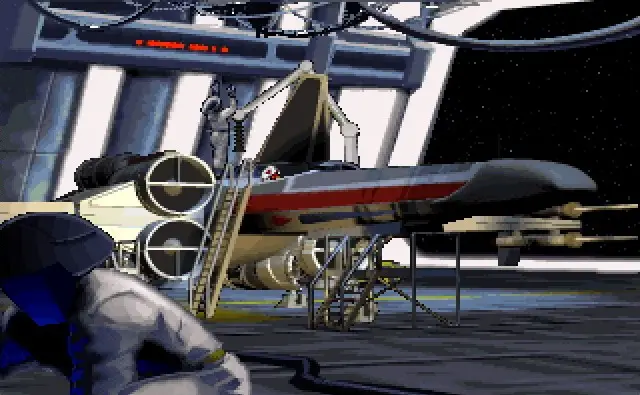
And that difference is why Star Wars: X-Wing worked.
It understood that Star Wars already had the drama baked in. The music, ships, factions and stakes carried enormous emotional weight. The game did not need to overperform. Instead, it could focus on making the act of flying feel credible.
In practical terms, that meant objectives beyond simply clearing the screen. Escort missions, inspections, capital ships, bombing runs, survival, timing, priorities, and the unpleasant discovery that the target you ignored two minutes ago is now the reason the mission has collapsed.
It was cinematic, but not because the player was watching a movie.
It was cinematic because the player was being given problems that felt like Star Wars problems.
Power Management Made the Fantasy Click
One of the smartest things X-Wing did was make the cockpit feel like a place of decisions.
The player had to manage energy between lasers, shields and engines. That one system did a lot of heavy lifting. Suddenly flying an X-wing was not just about aiming well. It was about judgement. Do you keep speed high and risk weak shields? Do you recharge lasers and accept that your engines will suffer? Do you shift shields forward or aft? Do you panic and press the wrong key while a TIE fighter uses your hull as target practice?
Of course you do. Everyone does eventually.
This is where X-Wing made Star Wars physical in a new way. The ships in the films always looked cool, but the game made them feel operational. They had limitations. They had roles. The Y-wing felt different from the A-wing. The X-wing was not just an icon on a poster. It was a machine the player had to understand inside-and-out.
That is the difference between giving players a fantasy and giving them a responsibility.
Retro games often age best when their mechanics still tell a clear story. Star Wars: X-Wing’s power management still tells one. It says: you are a pilot, not a tourist.
The Technology Was Part of the Magic
Star Wars: X-Wing also arrived at a moment when PC hardware could finally sell the fantasy.
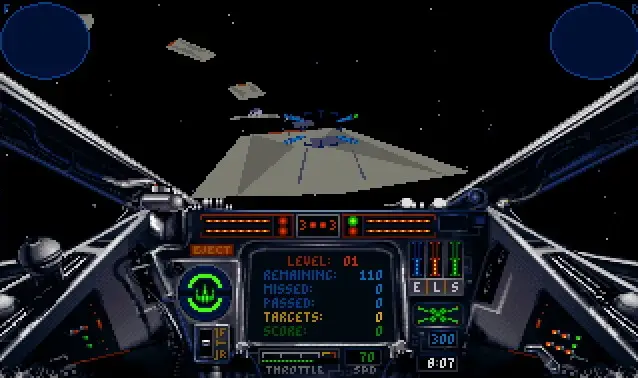
Its polygonal ships were not realistic by modern standards, but for the time they were amazing. They moved through 3D space in a way that made dogfights realistic and exciting. The cockpits, briefing screens, mission flow and audio all worked together to create the illusion of a functioning Star Wars military simulator.

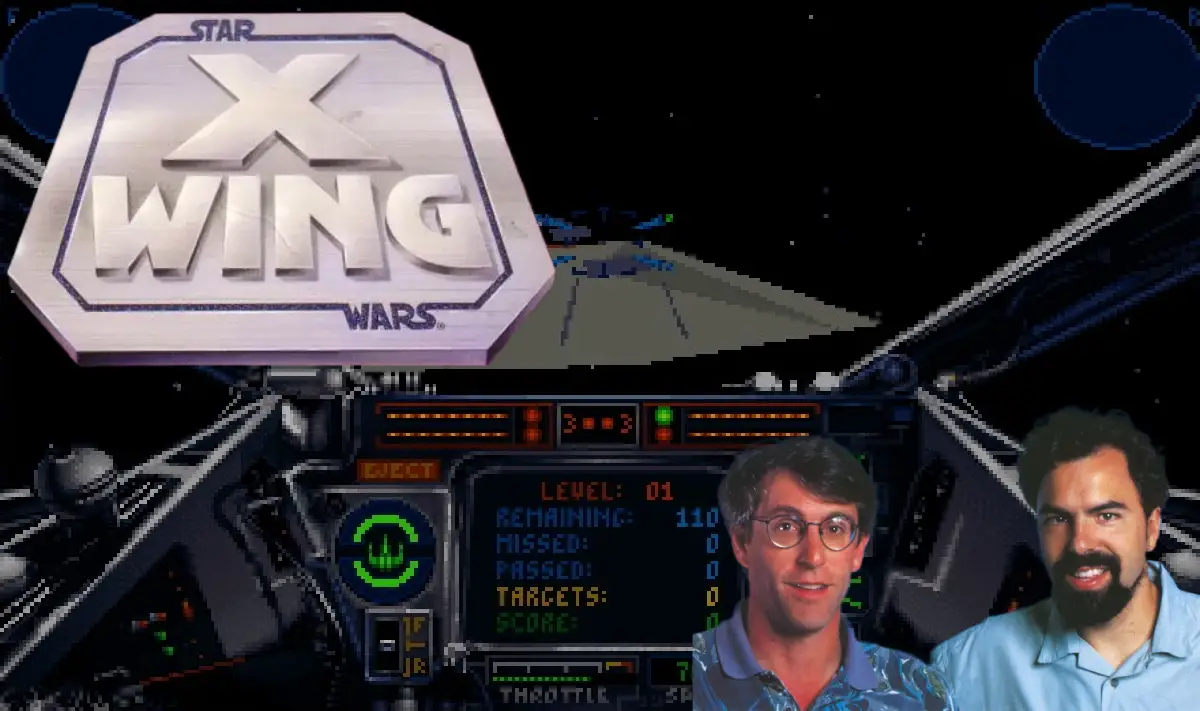
Originally, the team planned to build Star Wars: X-Wing using pre-rendered, 2D bitmap sprites that scaled and rotated to simulate 3D effects, much like Holland’s previous Secret Weapons of the Luftwaffe used. However, mid-way through development, Holland and project leader, Edward Kilham, realized that pre-rendered bitmaps could not deliver the precision required for the first-person targeting and authentic ship collisions. They made a high-risk decision to abandon the sprite work entirely, and pivot to a true 3D polygonal engine. The man who led the 3D graphic charge was Peter Lincroft.
Modern players may look at early 3D and see edges sharp enough to cut bread, but in 1993, this was part of the appeal. The game looked like it belonged to the future of PC gaming. It also gave the Star Wars universe a new kind of visual language: not arcade abstraction, not side-scrolling interpretation, but a simulated battlespace.
That technological leap is why X-Wing belongs in the same broad historical conversation as other games that arrived at the moment their hardware could finally support their ambition, such as Sega’s Daytona USA.
Unlike Sega, Holland and Kilham didn’t have a $2 million 3D rendering chip from GE Aerospace at its disposal. Instead, the team had to create an engine that could run on a simple Intel 80386 processor.
The result was still impressive. Flat 3D shaded polygons were used instead of the more computationally intensive textured polygons of arcade games. The cockpit was still a rendered 2D bitmap, but the other ships were all 3D models. To really land how impressive this was, the game could run on just 550 kilobytes of RAM.
The Game Was Hard Because the Fantasy Was Hard
X-Wing could be unforgiving.
Some missions demanded precision. Some expected players to understand objectives clearly and execute them with very little margin for chaos. The game was not always elegant about teaching. It could feel rigid, demanding and occasionally cruel in the special way that early 1990s PC games often considered character-building.
But the difficulty also supported the fantasy.
Being a Rebel pilot should not feel casual. The films may focus on heroism, but if you step back for even a second, the job is absurdly dangerous. Tiny fighter. Enormous Imperial machine. Endless TIE fighters. Capital ships with the social grace of floating apartment blocks covered in guns.
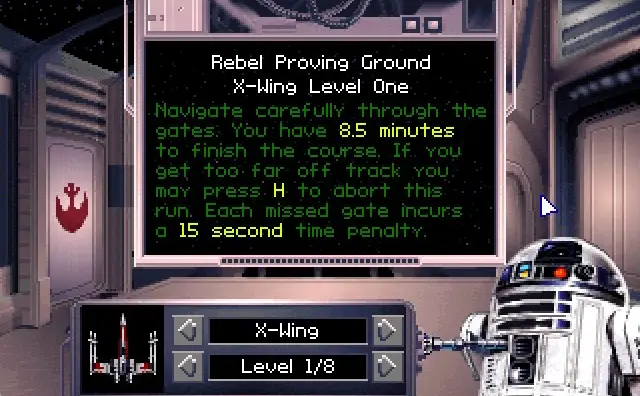
X-Wing made that imbalance playable.
Success felt good because the game made you earn it. Completing a mission was not just a matter of surviving a level. It felt like you had understood the assignment, managed your machine and held your nerve long enough to return to the hangar.
That was new for Star Wars games.
The player was not simply borrowing the fantasy. The player was being tested by it.
Why X-Wing Changed Star Wars Games
The reason Star Wars: X-Wing matters is not just that it was good. It is that it changed expectations.
After X-Wing, it became easier to imagine Star Wars games as serious genre entries rather than licensed curios. The franchise could support demanding simulation. It could support original mission design. It could give players a role inside the universe without relying on film scenes as a crutch.
That opened the door for TIE Fighter, which would refine the formula and make the brilliant decision to place players inside the Imperial war machine. It also helped establish a lineage that would continue through X-Wing vs. TIE Fighter and X-Wing Alliance.
But even before those sequels, the first X-Wing had already made the argument.
Star Wars worked best in games when developers stopped asking, “How do we adapt the movie?” and started asking, “What fantasy can this medium make playable?”
That question still defines the best Star Wars games.
You can see it across the larger history of the license, from arcade cabinets to RPGs, shooters, racers and strategy games. Looking across a full Star Wars games archive, X-Wing stands out as one of the moments where the franchise stopped feeling merely adapted and started feeling translated.
That is a much harder thing to do.
Lawrence Holland’s Legacy
Lawrence Holland did not make Star Wars: X-Wing feel real by making it realistic.
He made it feel real by understanding what kind of reality Star Wars needed. The ships had to feel like aircraft because that was the cinematic language of Star Wars. The missions had to feel military because the player was joining a rebellion at war. The systems had to matter because a cockpit fantasy without decisions is just a moving postcard.
Holland’s background in historical flight sims gave him the tools to build that fantasy properly. LucasArts’ reclaimed control of the license gave the project the space to exist. PC technology gave it the stage. The Star Wars universe gave it the emotional charge.
Star Wars: X-Wing worked because all of those things met at the right time.
That is why it remains such a strong subject for retro history. It is not simply a beloved old game. It is a case study in how a license, a developer, a genre, and a moment in technology can line up and produce something that feels inevitable only after someone has actually done it.
About the Author
Søren Kamper – Guest Contributor

SWTORStrategies.com / Star Wars: Gamers